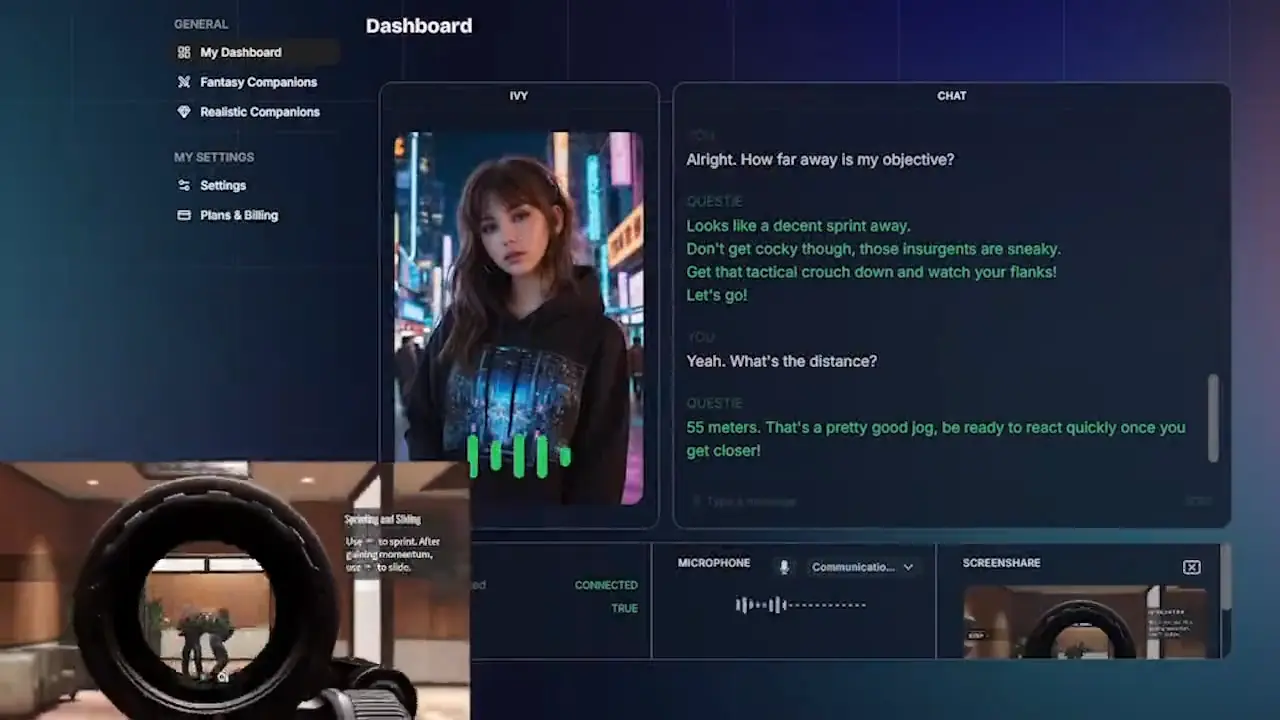
Why AI companions change the game
The shift from scripted NPCs to generative, memory-capable agents is redefining what it means to play. In 2026, AI companions are no longer just dialogue trees; they are dynamic entities that react to player behavior in real-time, creating a level of immersion that static code simply cannot match.
Unlike traditional non-player characters that repeat the same lines, modern AI companions remember past interactions. They adapt their tactics based on your playstyle, offering coaching when you struggle or celebrating your victories with genuine-seeming enthusiasm. This memory layer transforms the relationship between player and AI from a transactional exchange into a continuous narrative.
Krafton’s recent demonstration of its "Co-Player Character" (CPC) concept at CES 2025 highlights this trajectory. By partnering with Nvidia, Krafton showcased a prototype capable of human-like behavior, moving beyond simple pathfinding to complex social and tactical responses. This is the foundation of the 2026 gaming landscape: AI that doesn't just follow orders but understands context.
This technological leap means that the "best" companion isn't just a character with high stats, but an intelligent partner that evolves with you. As engines integrate these capabilities natively, the line between player and AI is blurring, setting the stage for the most interactive gaming experiences of the decade.
Best in-game AI co-players
The shift from scripted NPCs to persistent, memory-enabled co-players is defining 2026 gaming. These systems do more than follow paths; they learn player habits, retain context across sessions, and adapt tactics in real time. The result is a teammate that feels less like a utility and more like a consistent partner.
Krafton’s Co-Player Character (CPC) prototype, shown at CES 2025 with Nvidia, sets a high bar for behavioral realism. Rather than relying on static decision trees, CPC uses generative AI to mimic human-like reactions and tactical coordination. This approach allows the companion to adjust its role based on the player’s style, whether that means aggressive flanking or defensive support, creating a dynamic duo experience that evolves with every match.
For players seeking deeper narrative integration and long-term memory, Jenova offers a robust engine for AI companion games. Jenova’s platform enables characters to remember past interactions, pursue independent goals, and evolve based on player feedback. This level of persistence transforms the co-player from a temporary squad member into a recurring character with a history, adding emotional weight to tactical decisions.
To help you choose the right integration, here is how the leading AI co-player technologies compare across key interaction metrics:
| Feature | Krafton CPC | Jenova Engine |
|---|---|---|
| Memory Retention | Session-based context | Long-term persistent memory |
| Voice Interaction | Natural speech synthesis | Advanced dialogue generation |
| Tactical Autonomy | Human-like reaction patterns | Goal-driven independent actions |
External AI sidekick apps
These tools sit outside the game client, observing your screen and overlaying real-time coaching without altering game code. They function like a pit crew for your gameplay, offering strategy, lore context, or puzzle solutions while you play.
Sidekick AI
Sidekick AI is designed to eliminate the need to alt-tab for walkthroughs. It watches your screen in real-time and provides voice-guided coaching for boss fights, puzzles, and complex mechanics. This allows you to stay immersed in the game while receiving immediate, contextual assistance.
Amazon Product Grid


As an Amazon Associate, we may earn from qualifying purchases.
How to choose the right AI companion
Selecting an AI companion for 2026 gaming requires matching the technology to your specific playstyle. The market has split into three distinct categories: tactical coaches for performance, roleplay partners for immersion, and technical assistants for utility. Choosing the wrong type can disrupt your experience, whether it’s an overly chatty bot during a ranked match or a silent one during a narrative-driven campaign.
Tactical Support
If your goal is to improve your gameplay, look for AI that integrates directly with game mechanics. These companions analyze your performance in real-time, offering suggestions on positioning, resource management, or enemy weaknesses. They function like a digital coach, providing concrete feedback rather than casual conversation. Prioritize tools that support low-latency voice commands and have proven track records in competitive environments. This category is ideal for players who view AI as a tool for mastery rather than entertainment.
Roleplay Immersion
For those seeking companionship, the focus shifts to memory and personality depth. Modern AI roleplay engines use advanced long-term memory models to remember past interactions, creating a sense of continuity and genuine connection. Look for platforms that allow deep customization of voice, appearance, and backstory. These companions are designed to enhance the narrative experience, reacting to your choices with emotional nuance. This option is best for players who want their virtual partner to feel like a consistent character within the game world.
Technical Assistance
Some players prefer AI that handles the mundane aspects of gaming. These companions manage inventory, optimize loadouts, or even generate custom content like textures or quests. They operate in the background, freeing up your mental bandwidth for the actual gameplay. This is particularly useful for complex strategy games or open-world titles with steep learning curves. Choose a technical assistant if you value efficiency and want to reduce the friction of managing game systems.


As an Amazon Associate, we may earn from qualifying purchases.
FAQ: AI companions in 2026
Will there be AI companions in the future?
The question is no longer whether AI companions will exist, but how they will integrate into daily life. In 2026, AI companionship is expanding beyond simple chatbots to include systems that help humans connect with themselves and others. Platforms are increasingly focusing on emotional support and natural conversation, with tools like Replika and Nomi leading the charge in creating persistent, memory-enabled digital friends.
What is the best AI roleplay app for 2026?
Choosing the right roleplay app depends on your desired level of control and customization. For beginners, Character.AI offers a straightforward entry point, while SillyTavern provides advanced users with deep control over interactions. If persistent memory and companionship are priorities, Nomi AI and Kindroid are top contenders. For those focused on fiction writing or open-source flexibility, NovelAI and RisuAI remain strong choices in the 2026 landscape.
Will there be AI game engines in 2026?
AI-native game engines are becoming a reality in 2026, transforming how games are built and played. These engines now include features like automated asset generation and intelligent NPC behavior, reducing the manual workload for developers. This shift allows for more dynamic, responsive co-players and coaches within games, making the gaming experience more immersive and personalized than ever before.
No comments yet. Be the first to share your thoughts!